
Remodeling Bathrooms: What We’ve Learned After Years of Designing Them

Over the years we’ve learned a lot about what works, what doesn’t, and where clients should invest their budget for the best results. Bathrooms are one of the hardest working rooms in the home, and thoughtful decisions about materials, layout, and lighting can make a huge difference in both function and beauty.
Below are some of the most common questions we get from clients when planning a bathroom renovation.
How Much Does a Bathroom Remodel Cost?
The cost of a bathroom remodel varies widely depending on the size of the space, material selections, and whether plumbing or layout changes are required.
To simplify things, we usually categorize bathroom remodels into three general types:
Powder Bath
A powder bath remodel typically focuses on cosmetic updates such as:
wallpaper or paint including labor $2000 - $3000
vanity $750 - $1500
faucet, sink, plumbing $1000 - $1500
mirror $300 - $600
lighting, electrical labor $400 - $800
flooring $1000 - $2000
accessories and hardware $150 - $300
TOTAL COST RANGE = $6000 - $10,000 plus design and oversight
These small spaces are the perfect place to have fun with bold design choices.
Guest Bath
A guest bath remodel often includes:
demo $1000 - $1500
new tile $1300 - $2300
tile labor $2000 - $3000
vanity (ready-made or custom) $1200 - $3000
countertop (remnant with installation) $1000 - $1500
plumbing fixtures & labor $3500 - $4500
lighting fixtures & labor $1500 - $2500
mirror(s) and accessories $800 - $1500
TOTAL COST RANGE = $12,000 - $20,000 + design and oversight
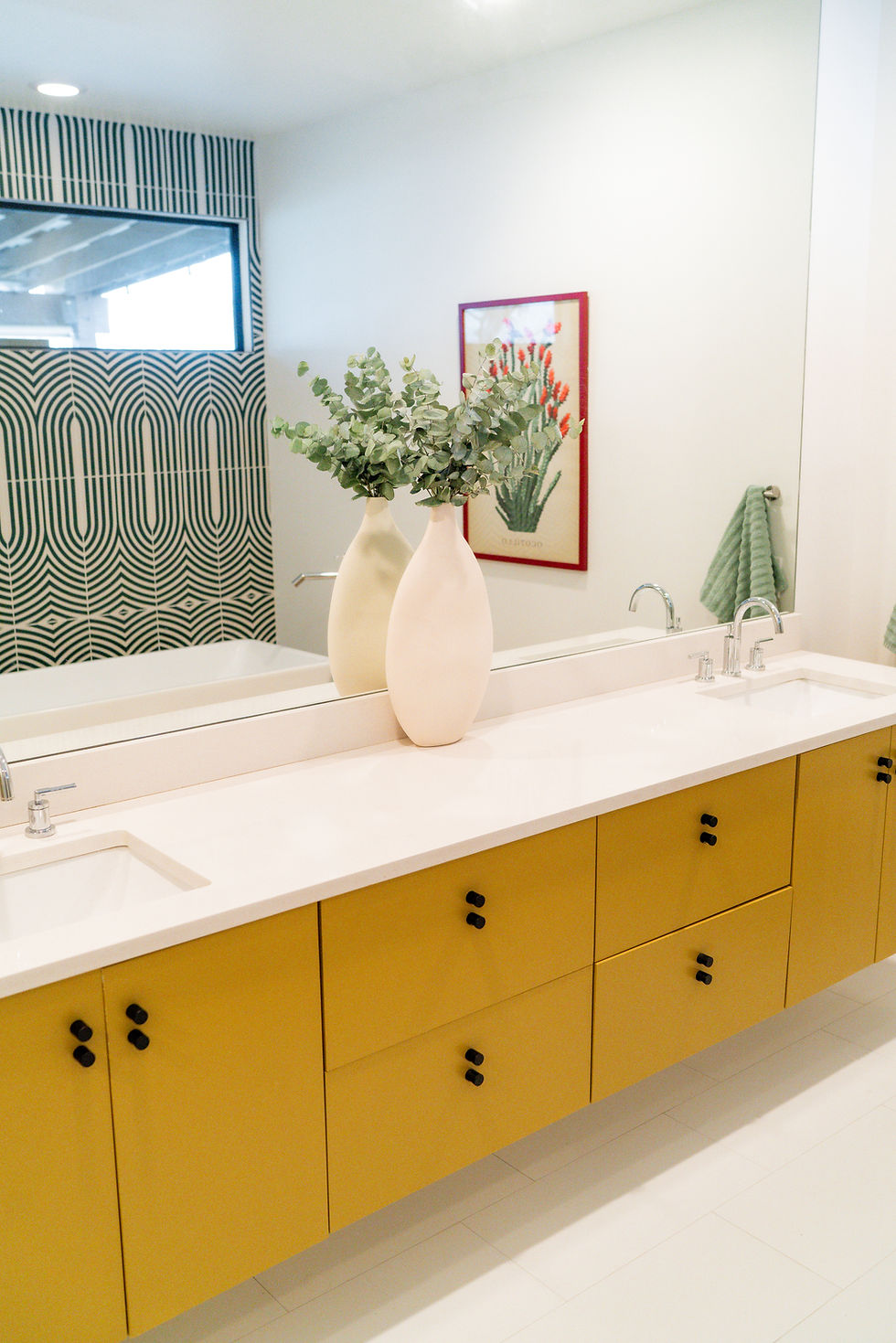
Primary Bath
Primary baths are the most complex because they include:
large showers
freestanding tubs
double vanities
custom storage
extensive tile work
higher-end materials
These spaces also benefit from thoughtful lighting, layered materials, and custom details.
TOTAL COST RANGE = $25,000 - $40,000

How Do I Choose Bathroom Materials?
Marble vs Ceramic vs Handmade Tile
One of the biggest decisions in a bathroom remodel is selecting materials.
Marble
Marble is the classic choice for luxury bathrooms.
Pros
timeless elegance
natural veining adds movement and depth
elevates the entire space
Considerations
more expensive than ceramic
should be resealed annually
natural variation requires careful installation
In one of our recent projects, we even created a custom floor pattern using two types of marble, which required a very patient and talented tile installer.

Ceramic Tile
Ceramic tile has come a long way in recent years and offers incredible flexibility.
Pros:
more budget-friendly
extremely durable
available in endless shapes and colors
With the right layout, ceramic tile can still look incredibly custom.
How Can I Make Ceramic Tile Look High-End?
Layout makes all the difference. Instead of a basic stacked or running pattern, consider:
framed tile layouts
contrasting grout
decorative liners
mixing shapes or colors
In this project we used simple subway tile framed with a soft green pencil liner, creating a custom look using an inexpensive tile.

We also often create patterns with subway tile to provide more interest.
Can I Mix Materials?
Absolutely — mixing materials is one of the best ways to create visual interest without dramatically increasing cost.
For example, we often combine:
ceramic field tile
marble accents
pencil liners
patterned flooring
Should I Choose a Ready-Made or Custom Vanity?
The answer depends on your space and how the bathroom will be used.
Ready-Made Vanities
While we usually do custom vanities, ready-made vanities can be a great economical solution, especially in powder baths.
They work well when:
the room dimensions allow standard sizing
the bath is used less frequently
budget is a priority
There are also beautiful higher-end ready-made options available, like this one from Four Hands.

Another option we sometimes recommend is purchasing a ready-made vanity and painting it a custom color to better fit the design.
Custom Vanities
Custom millwork gives you complete control over:
size
storage
finishes
design details
For example, this vanity includes a custom scalloped toe kick, a detail that adds personality and craftsmanship.

Don’t Forget the Floor
Floors are another opportunity to add personality.
Instead of a simple grid layout, we often use ceramic tiles to create patterns that feel custom. Here are some unique ways to lay penny and mini-hex tile, via Pinterest.
Tile Isn’t Just for Showers
Tile can also be used creatively in other areas of the bathroom.
For example:
as a backsplash
to frame mirrors
as an accent wall
Bathroom Remodeling Glossary
Bullnose Tile Tile with a rounded finished edge used to terminate tile installations.
Pencil Liner A narrow decorative tile used to frame or separate tile sections.
Mitered Edge Two tiles cut at 45 degrees so their edges meet cleanly without visible trim.
Niche A recessed shelf built into the shower wall for shampoo and soap.
Schluter Trim A metal edge trim used to finish exposed tile edges.
Bathroom remodels involve hundreds of decisions, but thoughtful planning can turn even a simple bathroom into a space that feels intentional, beautiful, and highly functional.
And if there’s one thing we’ve learned from designing bathrooms for years — it’s that the small details are often the ones that make the biggest difference. Let us know if we can help with your bath remodel!


Comments